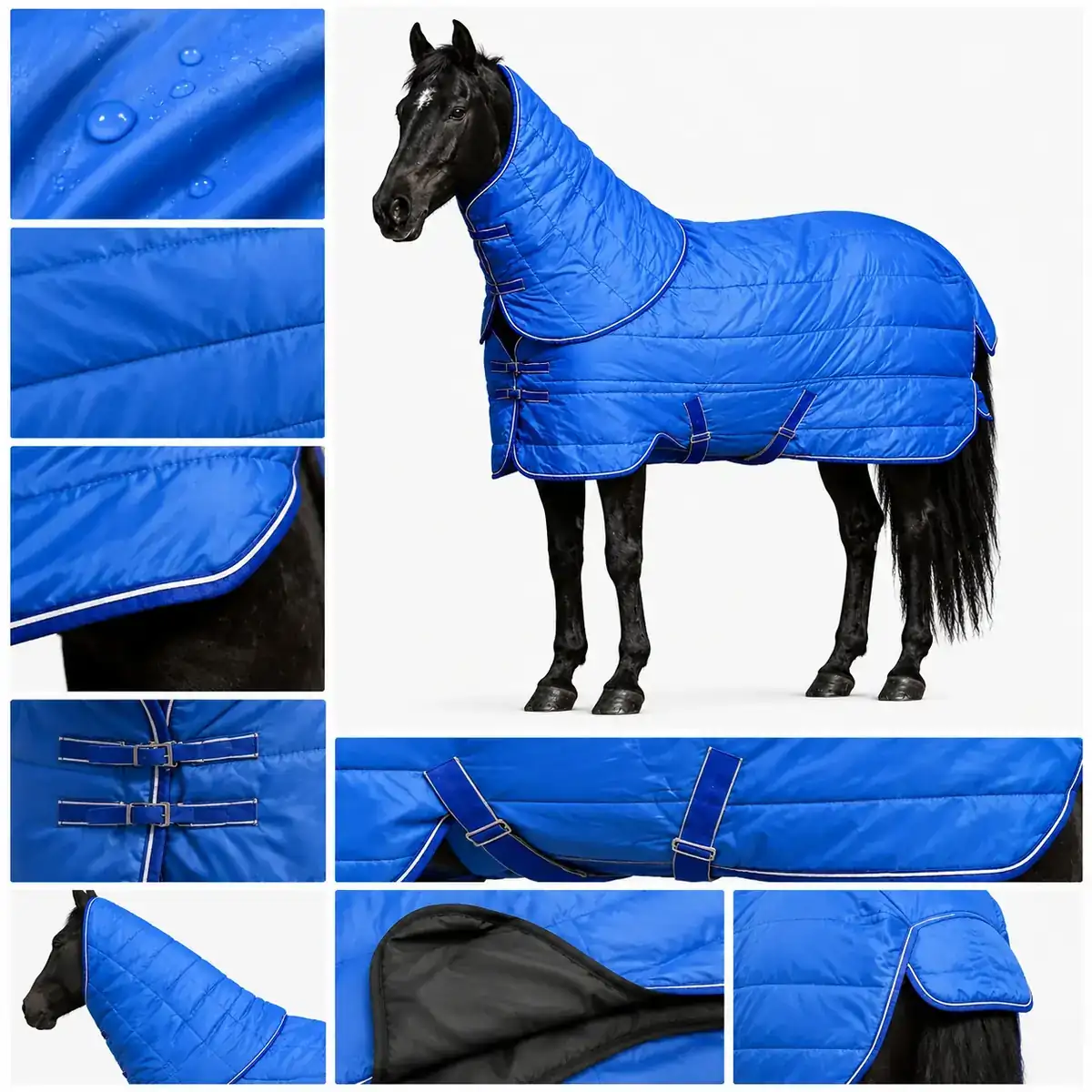
Define the selling promise before selecting the fabric
Begin with the conditions the rug is expected to face: occasional showers, repeated turnout, prolonged rain, wind-driven exposure or a value-led seasonal programme. The intended market, retail price, care routine and warranty position influence the acceptable construction and evidence.
Write the claim in plain language first. Then translate it into measurable requirements. This prevents a material being chosen because its name sounds suitable while the finished product and customer promise remain undefined.
State what the finished rug must do, where it will be sold and which evidence must support the claim before quotation begins.
Record the complete outer-fabric identity
“600D polyester” or “1200D ripstop” is not a complete material specification. Record fibre composition, yarn or denier direction, weave or construction, nominal fabric weight where relevant, coating or membrane system, finish, colour reference and the supplier's controlled material code.
If a factory proposes a substitution, require a written comparison. The revised material should not silently inherit test results or claims from the original reference. Keep an approved swatch or sealed reference connected to the sample and bulk-production file.
Agree the test method, specimen and acceptance point
A result has meaning only when buyer and supplier know what was tested, by which method and against what threshold. Specify whether the test applies to the raw textile, finished coated material, a seam, or the completed product construction. Record the laboratory or internal-control route and the required reporting format.
Hydrostatic-pressure testing is commonly used to assess resistance to water penetration, but the chosen method, conditioning and specimen must be agreed. If breathability is part of the retail claim, define a separate suitable method and target; it should not be inferred from a waterproof result.
Treat seams and construction as part of the system
A passing fabric result does not prove that every finished rug will resist water in use. Needle holes, seam position, tape or sealing method, binding, hardware attachments and high-stress construction can change performance. Identify which seams require special treatment and how that treatment will be inspected.
Review the physical sample after normal fastening and movement. Confirm that construction changes introduced after testing do not invalidate the approved reference. If the commercial promise relies on finished-product testing, describe that route separately from material testing.
Connect the claim to production controls
The approved specification should travel with the purchase order, material booking, sample approval and inspection plan. Incoming material must be identifiable against the controlled reference. Production should record any lot change, coating change or authorised substitution.
- Approved material and colour code
- Agreed test report or verification record
- Seam and construction instructions
- Sampling frequency or lot-control agreement
- Finished-product inspection points
- Care label and customer-facing claim
This chain makes a claim easier to investigate if a complaint occurs.
Write care instructions that protect the approved performance
Cleaning chemistry, heat, abrasion and repeated wear can affect coatings and water-repellent finishes. The care label should reflect the approved materials and process, not a generic instruction copied from another product. If reproofing may be needed during the product life, explain it accurately without promising indefinite performance.
Customer service should distinguish water-repellent surface behaviour, waterproof-material testing and the condition of a used garment. Clear language reduces unrealistic expectations and gives retailers a more consistent response path.
Use one quotation checklist
For a comparable quotation, send every supplier the same use case, fabric identity, performance targets, test methods, construction details, sizes, colours, quantity and packing brief. Ask each supplier to list exclusions and assumptions.
- What exact material is being quoted?
- Which evidence supports each performance claim?
- Does the evidence match the production material?
- How are seams and attachment points controlled?
- What substitutions require buyer approval?
- Which records will be retained after production?
The result is not merely a better technical document. It is a cleaner commercial comparison and a more defensible product promise.
© 2026 Guangzhou Gugoo Pet Products Factory All rights reserved. This article may be linked to with attribution but may not be reproduced, translated, republished or used for commercial training without written permission.